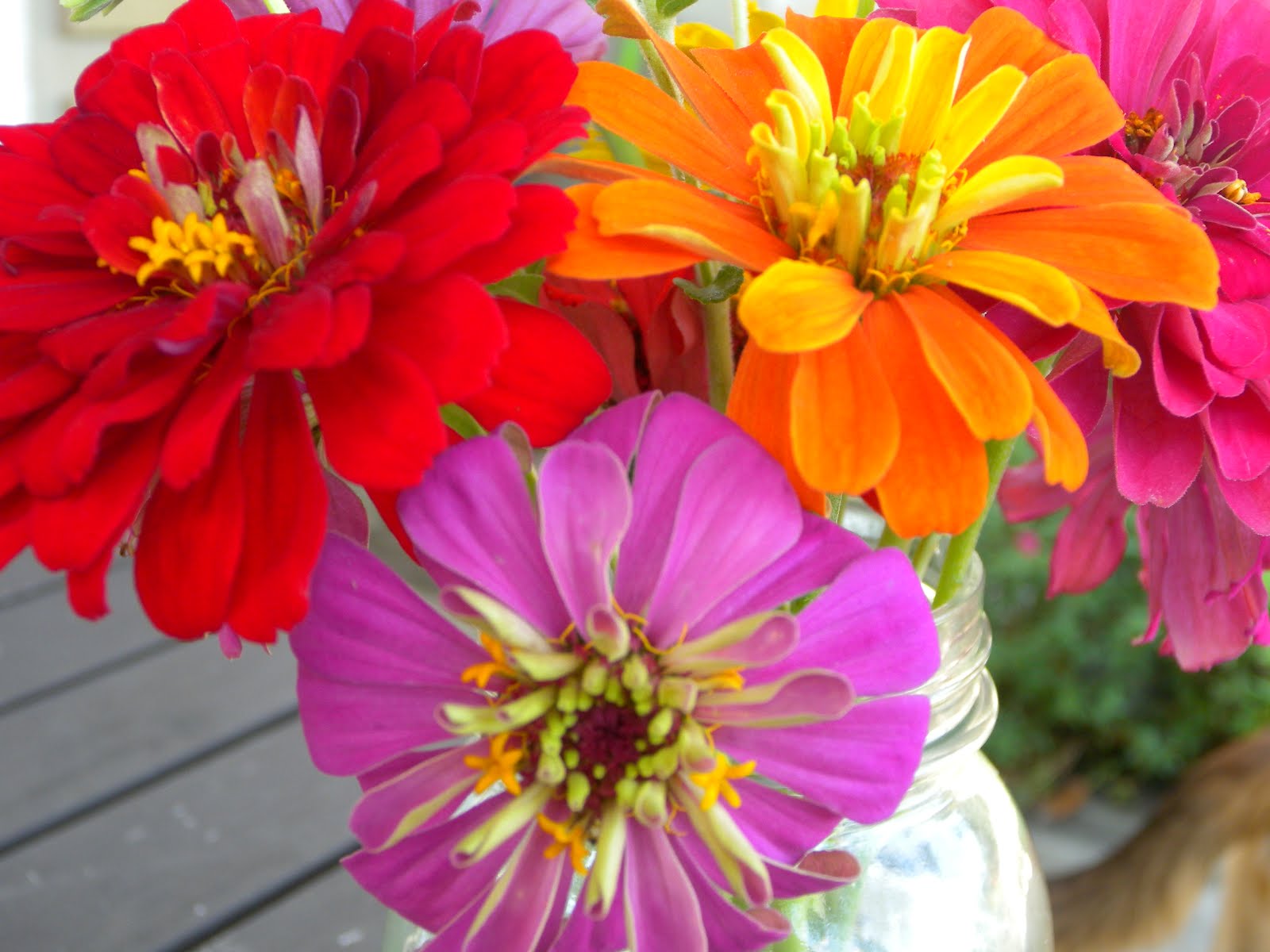
Embracing and Welcoming Change: At Home and in the Garden
“August rain: The best of the summer gone and the new fall not yet born.
The odd uneven time.” ~ Sylvia Plath
This week I found out that my son who is in the US Navy is going to be stationed in my hometown of Newport News, Virginia. Although this makes me very happy because he’ll be living closer to me, it has also brought on an intense feeling of sadness for me to endure momentarily. The last time that I was in Newport News, was for my Mother’s funeral. I remember thinking while sitting at the burial service that I knew more people buried in the cemetery than I actually knew who were still living in Newport News. This thought seemed to put things into perspective. If I’m not mistaken, I have very little family left in the city other than an Aunt and some very distant cousins perhaps. Most of my childhood friends have also moved elsewhere. I pretty much left the area to begin my adult life back in 1982, when I moved to Vermont.
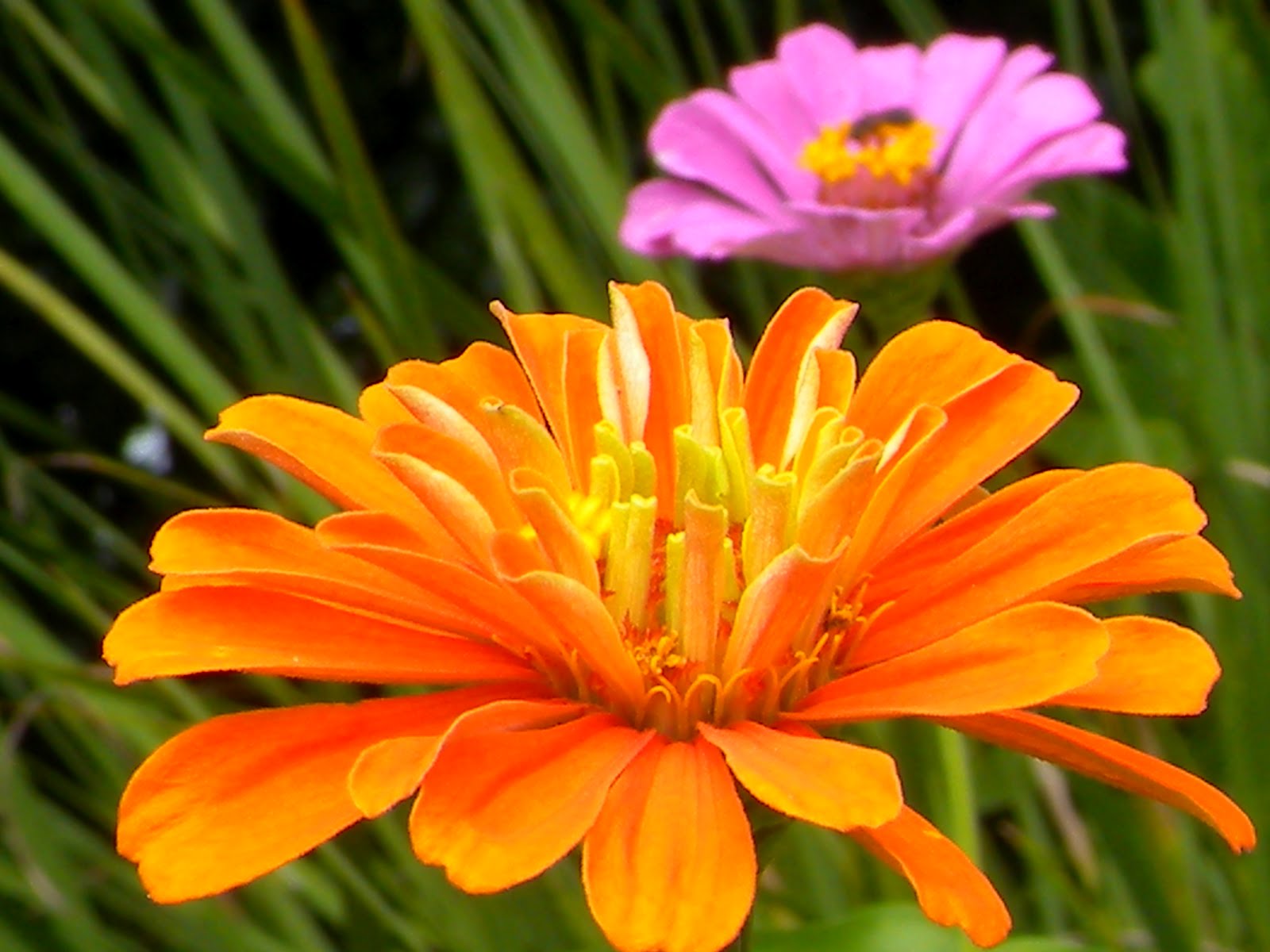
Wow, so now my son will be creating his own memories in my old stomping grounds, at least for as long as Uncle Sam wants him to anyway. In a place that I’ll always call home. In a place that still brings back so many happy and sad memories. I can only embrace my feelings now by accepting the fact that I really miss my mom, dad and brother. I miss my grandmother and aunts and uncles who are now deceased. I miss what was, but I have to look forward to what’s ahead.
It’s almost the end of August, and I’m starting to feel the change in daylight. The days are definitely getting shorter. This is that time in the southern garden where you start to notice that most of the flowers are fading and are finished blooming. A few stragglers remain and yet, although you’ve cut back your perennials, you know that their fall bloom will be small. You’re appreciative for your still blooming lantana and portulaca. It’s easy for me to see how much time has passed by going back through my many photo albums since things sprung into life back in early May. These photos reflect the passage of time. They also get me through the winter months with hopes of what we’ll have next spring and summer.
The question becomes, what do you plant next in this almost seemingly ever living environment? My goal now is to take a little break and to let it cool down a little before adding the fall annuals. Basically it is time to look at the garden, and figure out what I want to add or possibly move around or get rid of next year. It is time to plan, relax a little, and recover. It’s time to pull some weeds. It’s time to fantasize about living in some tropical paradise and to be very thankful that we don’t get buried in snow. Yet sometimes I think that may be better than seeing dormant plants and dead looking grass.
I look at my arms, and they’re covered in scabs from multiple ant bites and from a recent rash from contact dermatitis. A rash caused by the sensitivity to the exposure of plant oil, usually from plants with spines or thorns, in combination with sunlight. Nothing serious, just temporary intense burning and itching that goes away for me rather quickly. It is not as severe as poison ivy. It is just a consequence of not wearing long sleeves.
I had a great interview this week with a magazine that I’ve always considered to be a leading resource of information for people living with paralysis since the onset of my spinal cord injury back in 1983. PN Online, Paraplegia News is published by the Paralyzed Veterans of America. I am thrilled to be listed as a resource, as a person of PN Online, for anyone with a disability who is interested in accessible gardening. I’m pretty ecstatic actually! I’ve always looked to them for information, and I hope more people with spinal cord injuries will connect with me, my blog and on facebook.
This week with the rain, I’ve had time to catch my breath a little and to actually add dirt to and buy seeds for my vegetable planters. I’ve also taken a breather from advocacy to let things work themselves out a little. Sometimes people, like a garden, need time. I’ve revisited a few older accessibility issues and thankfully found out that designated accessible parking had been created on the street near our fabulous, and very accessible aquarium. The SC Aquarium has great employees who have always had great attitudes about doing everything possible to make every visitor feel welcomed. I was around in the early 90’s when they asked me to review their building plans, and they still value my opinion today. This kind of respect makes me incredibly happy.
In the week ahead, I’m feeling privileged to have been asked to look at a site for accessibility to a planned community garden. This type of planning will, hopefully, make it a better place for all to enjoy. I’ll also be looking at potential real estate for my son. This too will be fun. I look forward to going back to visit my old homestead more frequently. Fortunately, I still have a sister living not too far away from Newport News, a few terrific nieces and many great nieces and nephews. I also have a couple of old childhood friends not living too far away either. (One friend just got her own chickens!) It is definitely time for more happy memories to be made for sure! Life is too short not to live for these happy times.
"To every thing there is a season, and time to every purpose under the heaven:A time to be born, and a time to die; a time to plant, and a time to pluck up that which is planted; A time to kill, and a time to heal; a time to break down, and a time to build up; A time to weep, and a time to laugh; a time to mourn, and a time to dance; A time to cast away stones, and a time to gather stones together; a time to embrace and a time to refrain from embracing; A time to get, and a time to lose; a time to keep, and a time to cast away; A time to rend, and a time to sew; a time to keep silence, and a time to speak; A time to love, and a time to hate; a time of war, and a time of peace. " The Bible, Ecclesiastes 3:18.
Excellent article by PVA Magazine, PN Online: http://www.pvamag.com/pn/article/4911/access_to_the_garden
Monday, August 20, 2012
Monday, August 13, 2012
Container Vegetables: Learning from Mistakes
A gardener learns more in the mistakes than in the successes. ~ Barbara Dodge Borland
Yesterday I had the realization that through my gardening, my blog and my work with Access to the Garden, I am changing. I’m changing in a healthier kind of way. I told my husband that I only wanted a homegrown organic tomato in a recipe we decided to try! After eating our own fresh tomatoes all summer, I couldn't think of using anything else. This isn’t to say that I will not have an occasional relapse and eat french-fries, but I’m striving to do better with my diet. When people recognize that they can make a change, even within themselves, great things can happen.
I am living in an area where there are actually two growing seasons for vegetables. As usual, I’m a little behind with my container vegetable plantings, but I’m certain that I’ll learn something from this experience as well. I have chosen to use Terracotta containers and my previously purchased elevated beds for my vegetables because they are easier for me to tend to from my wheelchair.
I have purchased a soilless mixture, also known as synthetic soil, and I’m ready to use it in my shallow containers that I’ve had stored away. This does not mean that my soil is artificial. It is simply a mixture of organic and mineral components. There are organic potting mixes for sale, but usually at local garden nurseries and not at the large garden centers. I also now know how to make my own for future use too. I’ve learned to use coffee filters over the holes to retain the potting mix.
The organic part of a mix may be peat moss, coir (coconut husk), bark of hardwoods or conifers, or a combination of these organic ingredients. The mineral part may be vermiculite, perlite, pumice, builder’s sand, granite sand, or simply a combination of them. The most commonly used minerals for soilless mixes are vermiculite, perlite, and fine sand. The mix you buy may be 50% peat moss and 50% vermiculite, or 50% ground bark and 50% fine sand, or several other combinations of the organic and mineral components depending on what you are using the soil for.
The ingredients in the mixes vary, but the principle behind all mixes is the same. Soilless “soil” must provide:
* Fast drainage of water through the media
* Air in the media for drainage
*A reservoir of water in the media after drainage
Most important in any container-growing medium is the air in the soil after drainage. Plant roots require air (particularly oxygen) for growth process respiration. In a heavy garden soil, there is little remaining pore space between soil particles. When the water is applied to the soil, it drives out air filling the small pore spaces. A container mix has small and large pores (micro pores and macro pores. When the mix is irrigated, water is held in the micro pores but quickly drains through the macro pores, allowing air to follow. http://counties.cce.cornell.edu/chemung/agriculture/publications/container-growing-amending-soil.pdf
The size of the container will be determined by the vegetable grown. Generally, most vegetables grown in the soil can be grown in containers as long as ample space is provided for root development. Shallow rooted crops like lettuce, peppers, radishes, and herbs need a container at least 6 inches in diameter with an eight inch soil depth. Bushel baskets, half barrels, wooden tubs, or large pressed paper containers are ideal for growing tomatoes, squash, pole beans, and cucumbers. http://www.ces.ncsu.edu/depts/hort/hil/hil-8105.html
Several other sources on the internet provide very helpful information as well. I have shared many on my facebook page. Most importantly you should know which variety of vegetable that you’ll be planting, especially with tomatoes. Fertilization is generally 5-10-10 and is required more frequently with containers because it leaches out faster.
Which vegetables are best suited for a potted vegetable garden? http://nz.bing.com/images/search?q=Container+Vegetable+Gardening+For+Beginners&view=detail&id=F880C9599FEFD4F96C2A1279EED36348650444A6&first=0&FORM=IDFRIR
With the exception of a few space heavy vegetables like corn & pumpkin, almost all types of vegetables can be grown as potted plants. Just be sure to buy the dwarf varieties in each vegetable. Several seed packets now indicate if they are good for container use. A few examples of dwarf varieties available in each vegetable are given below. (I have seen corn grown in containers too!)
• Beets - Little Egypt, Early red ball
• Brussels sprouts - Jade cross
• Carrot - Short & sweet, Tiny sweet
• Cucumber - Patio pik, Pot luck, Spacemaster, Bush pickle
• Lettuce - Salad bowl, Bibb, Buttercrunch
• Onion - White sweet Spanish and Yellow sweet Spanish
• Pepper - Sweet banana, Long red cayenne, Jalapenno, Apply red cherry
• Spinach - Dark green bloomsdale
• Tomatoes - Tiny tim, Toy boy, Small fry, Spring giant, Pixie
• Eggplant - Slim jim, Black beauty
• Snap Beans - Tender crop, Bush romano
• Green Beans - Kentucky wonder, Blue lake
• Radish - Icicle, Cherry Belle
• Cabbages - Red ace, Dwarf modern
• Broccoli - green comet
• Squash - Gold Rush, Scallopini
The information that I’m providing is fairly basic. There are a lot of different opinions regarding container vegetable gardens. Even with the selection of containers, there is uncertainty. How do we know that the plastic is free of harmful chemicals, or if the metal is lead free? How do we know if there are dangerous preservatives in the wood that we’ve used? Use cedar or redwood when possible. These are each naturally rot and insect resistant. I recently read that you could use organic potting mix, organic seeds, with organic fertilizers and yet, if you are not using a PVC free or natural rubber garden hose, you could end up with Bisphenol A (BPA) in your food. http://www.huffingtonpost.com/organic-authoritycom/bpa-in-your-garden-maybe-_b_1544380.html
It is important to be aware of what’s going on with plastics, and to buy PVC free products that specifically say they’re safe. Pictured above is a polyurethane pvc free coil garden hose. Do your research regarding consumer safety before you buy any garden products, and choose what you feel comfortable with using. At least you’ll know that the food you grow isn’t genetically modified. (Scary stuff.)
Container vegetable gardening is a relatively new experience for me. I hope to add some raised beds in the fall to be able to grow even more vegetables by next spring. My neighbor recently told my husband that she knew that I really loved my flowers and that she enjoyed looking at them too. Little does she know that by next year I’ll be sneaking some veggies into my borders too!
With the abundance of information available on container and raised bed gardening, hopefully our gardening mistakes will become less and less! It is important for us to learn from them and to utilize the resources that are available to us. When someone can admit to making a mistake, so much can be accomplished. This is true in and out of the garden.
When an entity can admit that they can do better at providing equal access, or they can acknowledge that a situation is indeed potentially dangerous for a person with a disability, so much can be accomplished too. Progress can only be made with the acceptance that more can and needs to be done to improve any situation. A telltale sign that an entity hasn’t provided equal access is when someone says that no one with a disability has ever been there. There’s generally a good reason for this, and it’s usually because they can’t easily or safely get there.
Get out, garden, and get your hands dirty. Life is too short not to be surrounded by gorgeous flowers or to be stocked up with healthy food. They make you feel good. I’m certainly convinced! Please join me on facebook at Access to the Garden. Lots of great people, with lots of great ideas and beautiful flowers too!
********************************************************************************************************************
http://www.wholeliving.com/print/144897
Ingredients
2 tablespoons extra-virgin olive oil, plus more for drizzling
1 onion, thinly sliced
2 small tomatoes, sliced 1/4-inch thick
1 medium yellow summer squash, sliced 1/4-inch thick
1 medium Yukon Gold potato, sliced 1/4-inch thick
Coarse salt and freshly ground pepper
1 tablespoon fresh thyme leaves
2 tablespoons freshly grated Parmesan
Directions
Heat oven to 375 degrees. Heat oil over medium and cook onion until tender and lightly golden, 6 to 8 minutes.
Arrange the onion on the bottom of a 9-by-13-inch baking dish. Overlap tomato, squash, and potato on top of the onion. Season with salt and pepper, sprinkle with thyme and Parmesan, and drizzle with more oil.
Bake covered for 30 minutes. Uncover and bake until golden, 30 minutes more.
Monday, August 6, 2012
Mission Possible: Impossible is Nothing
Mission Possible: “Impossible is Nothing”
This week’s inspiration came to me from the nicest article anyone has ever written about me. My son wrote an article for his high school newspaper years ago that was also published in the National Edition of High School Journals. The article was entitled, “Mission Possible: Student taught lasting lessons by mother’s fortitude.” http://my.hsj.org/56444
Sometimes I forget where I’ve been to get to where I am now. A friend recently told me that her father once told her that if she didn’t sing her own praises, that nobody else would. The one lesson that I have learned as of late, is that there is a lot of truth to that statement. Fortunately, those who know me or still remember my past efforts know my fortitude. Can’t was never a part of my vocabulary, and neither was the word I.
Having led an effort that was once considered the leading effort in the state and recognized nationally by the President’s Committee on the Employment of People with Disabilities which is now no longer in existence, I take a lot of pride in what I had accomplished with the help of a lot of great people. My leadership was also once recognized with numerous awards and letters of recommendation from various mayors, institutions and other community leaders. I even introduced others from around the state to the concept of an active Mayor’s Commission on Disabilities. I still take a lot of pride in that too.
When others make great strides towards better access, I acknowledge their outstanding accomplishments too. It requires a community effort for success, composed of dedicated individuals with the right kind of attitudes. It also requires a commitment to maintain what is accomplished and an administration with the dedication to keep the move going, from one administration to the next. Yet, another lesson learned as I have pursued other interests.
You can only hope that the next person in charge will be as committed as you were to keeping the movement moving forward towards greater access. Sometimes it doesn’t seem to work out that way, and you realize progress has either halted or become worse. Once this realization hits you, you have to decide how much more is within you to keep things moving forward. No one wants to quit, yet no one wants that kind of responsibility as a volunteer when others are getting paid to do so. Quite frankly, you expect them to do what they are legally required to do and/or paid to do.
Someone recently asked me to write about how I got into gardening. Oddly enough, this is how I got into gardening. I got into gardening more or less as a retreat from the frustration that I was feeling from creating equal access in an area where attitudinal barriers are somewhat more extreme than the physical ones. An area where priorities are often not with creating better access and with administrations that are very quick to blame the past administrators for the lack of compliance. An area too where people with disabilities aren’t working together in a cohesive effort towards improvement. Complacency sometimes seems to be the norm, and most complaints aren’t followed through with the committed action necessary to make a change.
Even the best fighters know when to throw in the towel. “Am I fighting a losing battle?” I’ve asked this question quite often. I hope not. I’m a doer and I like progress, measurable results, etc. I also know when my efforts are wasted. I plug away at this little by little because I know that I will not let it get to me personally and that I will not let it overwhelm me. When I can see things being built the way they are supposed to be, and when I can participate equally, I am happy because I know others will be too. For now I’ll continue to help, but I do someday foresee reaching a threshold.
Sometimes we do feel disappointed about the seemingly lack of progress. It helps to focus on the positive efforts taking place wherever they may be happening, even if they are happening on the other side of the state. I jokingly say I want to move elsewhere sometimes, but I’m not quite ready to pack up and leave. I do see good results around me now too and others interested in learning advocacy. I’m feeling somewhat encouraged once again.
http://www.bonappetit.com/recipes/2012/08/tomato-feta-open-face-sandwich
Today I made an open faced tomato sandwich on fresh bread and from my own tomatoes. Even though I had pitiful results from my squash plants, my tomatoes have more than made up for it. My sandwich was delicious, and I am making a huge effort to eat healthier since I began my focus on Access to the Garden. My incredible fortitude, hard headedness and willingness to fight will sure as heck help me in the garden too! “Life is a garden! Can you dig it?” ~ Unknown
Tribal Tribune, Mission Possible: Student Taught lasting lessons by mother's fortitude
Tribal Tribune - Wando High School - Mission possible: Student taught lasting lessons by mother’s fortitude
Monday, July 30, 2012
Perception and Understanding: Seeing the Beauty
Many eyes go through the meadow, but few see the flowers in it. ~ Ralph Waldo Emerson
For me, sometimes seeing the obvious isn’t always so clear. A friend recently shared a story about seeing the berries on a Sassafras tree for the first time after several years of mowing around the tree and never knowing that it produced fruit. Of course the gardener in me immediately satisfied my yearning for more information on the Sassafras tree. I very quickly googled the tree and learned that because this Sassafras tree had berries it was a female tree. There are separate male Sassafras trees. The berries are edible by birds, and the bark is considered toxic by the FDA. Sassafras tea is still made today and utilized for medicinal purposes although the oil is banned by the FDA because when consumed in large quantities it is a carcinogenic. (Interesting information, yet somewhat confusing, to say the least.)
The more we look at something sometimes, the more we usually see. I once told a Contractor that, “the more I looked at my house, the more I realized what needed to be fixed.” He jokingly told me to stop looking at it. Sometimes when we step back and open our eyes we can see things more clearly and we can see things the way they really are. Sometimes, we need to zoom in on the details. Kind of the same way we should look at ourselves, our friends and our families.
I like to use my photos in my blog and on facebook. It is always my worry that I’m going to run out of flowers to take pictures of. Maybe eventually, but for now I realize that every bud, flower and every plant are somewhat different. Although I’ve been married to a photographer for a number of years, I have never taken a lot of pictures until recently, mostly because I feel as if I’m still learning how to use my digital camera. I once took a photography class when I had a 35mm Minolta. My pictures allow me to take a look at my plants from an even closer perspective. Digital means that I can take a lot of pictures without wasting a lot of film.
I discovered ‘macro’ on my camera by accident. Once while out photographing the bees on my purple Echinacea, I discovered my camera could really pick up the great detail of the bee’s wings. My husband has taught me the value of photographing during the right natural lighting and I’m still playing with composition. By capturing the detail of every flower or bud up close, I can understand how a particular plant grows. The flowers of an okra plant or of a passion vine are truly remarkable. To actually witness the growth of a fruit from the flower astonishes me.
The beauty is amazing to me. By taking my pictures up close my friends who are visually impaired can enjoy them too. That is very important to me. I can also see the flowers and plants with greater detail myself. The intricacies of each are amazing. My followers on facebook are equally inspiring. Many have their own story, heartache, death of a loved one, physical or psychological disability or some other hardship that has made them value gardening more and more. Many simply enjoy gardening as much as, if not more than, I do.
Whenever I travel, I find that I’m drawn to the flora of wherever I go. When I’m on the computer, I really enjoy looking at what others can grow. I sometimes expect others to be as intrigued as I am, and to understand why I’m enjoying this journey with Access to the Garden as much as I am. Last week’s blog about tomatoes was a lot of fun for me. I sincerely enjoyed everyone’s input. Not every blog will be fun, because everyday isn’t necessarily fun especially when you are dealing with accessibility and advocacy. I try to make the most of it sometimes, but that’s life. I’m sometimes frustrated, because I expect everyone to really see the flowers when they come to my door, but that doesn’t always happen. My own family would rather that I just enjoy the flowers, but to me the gardening is kind of a reward for the advocacy and other things that I have had to deal with in my life.
Whenever I deal with people, I try to understand issues from their perspective too. I can somewhat understand apprehension, especially if I’m the one to tell a professional that a situation was needlessly dangerous for me or offensive. When I refer to a situation as potentially dangerous “for me” I’m really referring to the majority of people with disabilities. Understandably, not all people with disabilities can agree with each other. Not to get into the political correctness of anything, but some people with disabilities are indeed handicapped by their own attitudes and complacency. Agreeably, we’re not all always playing on an even ball field, there will always be a 2% slope. It’s our own perceptions of ourselves that will be how we’re perceived by others.
Trying to live life and not be too sensitive sometimes can be really tough. There is nothing more that I want than for others to understand my perspective, generally derived by facts, and to do the right thing because it is simply the right thing to do. Whether it is access, attitudes or anything else you are willing to commit to.
Learning recently that the passion flower produced the passion fruit, that the pawpaw fruit didn’t grow in the coastal areas of South Carolina, that water alone would not wash off pesticides from fruits and vegetables because farmers wouldn’t use them if it did, and learning that I can’t always expect people to treat me with the same level of respect as I would extend to them have been really good lessons these last couple weeks. Also facing the realization that several friends and family who have never LIKED a single flower picture on facebook isn’t really significant grounds for unfriending them either, although sometimes it has been very tempting.
Sometimes we cannot expect everyone to see the flowers or the importance of what we are trying to convey. As long as we feel within ourselves that we are doing something very worthwhile, that is what is important. However others choose to learn is truly up to them. Rewards do come daily and even sometimes rather surprisingly from an Editor who says thank you in return for your compliment of a nicely written article using people first language.
Links to how to wash your fruits and vegetables:
http://suite101.com/article/how-to-wash-pesticides-off-fruit-vegetables-a174074
http://www.aprettylifeinthesuburbs.com/2011/06/kitchen-kapers-diy-fruit-veggie-wash.html
Rebecca's picture
100's of photos from Access to the Garden are on Facebook! Please like my page, and join in the conversations! Brenda B. Parent, Access to the Garden
Subscribe to:
Posts (Atom)