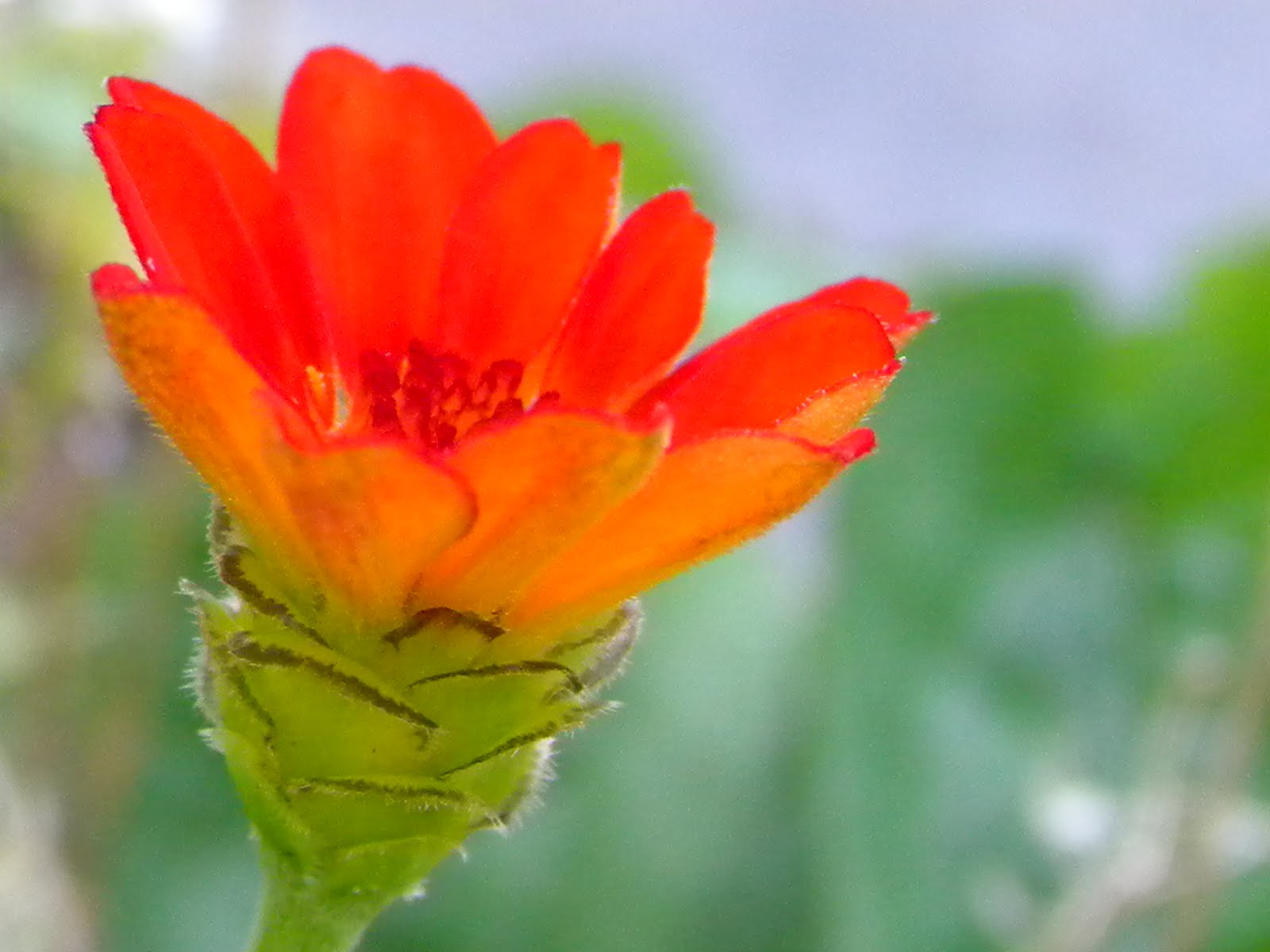
"Sometimes one must endure the critics, the insults and the muck to enjoy the beauty. In a world where negative attitudes and physical barriers truly handicap, I as an advocate, will endure these negative barriers on a daily basis with the continued hope that others will see the beauty too." Brenda B. Parent
In 2012, I believe in Open, Honest, and Direct Communication. I have no regrets, or remorse over what I've said or how I've said it. It is the truth. If my words are seen as irrational or nonrepresentational of others who live with disabilities or those who share my passion of gardening, maybe just maybe, you should re-evaluate your attitude, your words, and put on my shoes for just one day. I bet my life that you would feel differently! I have lived as a quadriplegic with a neurogenic bladder and bowel for 28 years. Trust me, I have had to deal with a lot worse.
The best part of advocacy is making positive change. Sometimes reactions catch me off guard. I'll never forget my husband saying very loudly to two young boys in a grocery store, "Hey, stop running!" as they nearly ran into me. The father came around the corner with an adversarial tone and told my husband that he didn't need to yell at his kids. My husband simply responded with, "Your kids nearly ran into my wife." No apologies were ever made from the father or children. The kids were old enough to know better.
You can't rationalize human behavior sometimes, especially if it isn't rational. Sometimes lessons are learned, sometimes not. Most are appreciative, and it is for those that I will always speak up when I encounter anything that is simply "just wrong." Everyday within my own life, I can't escape barriers, whether they are attitudinal or physical. They are a part of my life. I am strong because I refuse to be handicapped by these barriers to my independence. Ridiculous, you say? You have no idea....
On my vacation, I chose to go to the beach that promoted access. It wasn't maintained. I cannot not see this stuff, even on vacation. With the right attitudes, equipment, and accessibility, none of this is necessary. My husband who is not getting any younger had to pull me back up this. (It's steeper than it looks.) As people get older, they'll too be very appreciative of the many advocates that do what I do.
Tuesday, July 3, 2012
Sunday, July 1, 2012
Progress, Change and Insult: Battles in and out of the Garden!
“Progress, Change and Insult: Battles in and out of the Garden!"
Progress is impossible without change and those who cannot change their minds cannot change anything. ~ George Bernard Shaw
Great quotes are often worthy of repeating. After this week, I realized that constructive criticism is often difficult for even the most intelligent people to accept. As the offended one, undeserving belittling comments were thrown my way from those that I once considered to be professionals. Instead of apologies and gratitude, I was blasted as adversarial and ridiculous. A reporter in response to my statement that the use of the “h” word was regarded by people with disabilities to be as offensive and as derogatory as other inappropriate terminology used in the past describing the ethnicity of people, responded to me by saying, “That's a ridiculous statement. We will have to agree to disagree, ma'am.”
I was further humiliated by the Editor’s defensive statement where he said, “You have succeeded in identifying yourself as someone to whom neither of us would go for a rational, reasonable representation of individuals with which you share a common interest, whether it is the issue of people-first language or the topic of gardening.” (Some quotes are not worthy of sharing, but sometimes necessary so others can be enlightened to what an advocate has to put up with.)
For the ever growing friends (now over 250) who follow Access to the Garden on Facebook and the followers of my blog, I certainly hope that you feel differently about me, and that you share the same outrage as I do over these demeaning comments. To not waste energy on such negativity is almost impossible. Sadly, this was not the first time that these two were made aware of their use of offensive language either. With this particular publication, the word “handicapped” had been used close to 300 times during the last couple of years. In the last year alone, I and others had reportedly complained of the same issue on several different instances.
I cynically had a good laugh when I realized later that the Editor had worked previously for another publication that I was once very familiar with and had quit reading for this very reason. The only difference was that my allies within that publication had apologized repeatedly saying, “We’re sorry Brenda, it was the Editor.”
In a last ditch effort, I copied the exact quote from the AP Stylebook and shared it with the reporter. (This resource is used by all writing professionals.) “Disabled / handicapped - avoid describing anyone as disabled or handicapped in AP style. Blind and deaf should only be used for a total loss of sight or hearing.” Sadly, the response I received was as humiliating as the prior. “You are still ridiculous. Do not contact me again.” What truly handicaps people with disabilities, are unchanging attitudes like these. (This is an appropriate use of the “h” word.)
I realized after this communication that I was obviously wasting my time. I made my point, and I gladly shared my disgust with a few close friends, and, hopefully, with a few others who can possibly make a positive change. I may never be perceived as an ally there, but at least I said what needed to be said, with no regrets.
Sometimes, defensive behavior such as this can catch you completely off guard. Instead of, “We apologize for any offense, we certainly meant none”, you’re perceived as the adversary. In other circumstances, I have been ignored repeatedly when I’ve tried to offer my assistance as a professional on ways to improve access for people with disabilities. My suggestions can prevent injury, possible lawsuits, and provide an opportunity for more inclusion for people with disabilities. There is no licensure for doing what I do, but if there were I would have it. I’m certified as an ADA Coordinator from my participation and completion of many hours of training on the ADA. I have also completed numerous physical evaluations for compliance with the ADA, and many other accessibility requirements. Before quoting any regulation, I find the regulation and/or run it by a specialist if necessary to further help insure that I am correct.
For those who welcome me and to those who do say ‘thank you’, you make it all worth it. Seriously, this is why I put up with all of the nonsense. I will be the first to say that I look forward to the day when I am no longer needed, and to when even the best license professionals can see and review things in the same capacity as I do.
I recently had the pleasure of being invited to a special meeting held by our county parks commission regarding the future of our park system. This is one of the same entities that I had once had the opportunity to volunteer with years ago, one that valued the input of resident’s with disabilities. I am thrilled that they still do, and look forward to an additional 5000 acres of parkland to utilize. Hopefully, to include a few accessible kayak launches, accessible gardens, and other features to enhance inclusion.
I also had the privilege of attending the open house of a new educational Urban Farm, constructed and maintained by our state’s medical university, and by many members of the community. This was an exemplary effort that will be followed by many other institutions nationally. Efforts were made for inclusion which will, hopefully, be further enhanced by a few minor suggestions. An integrated effort needs to be made with the city and the state to allow individuals with disabilities to arrive safely from “site arrival points”, accessible parking, and bus stops. Nearby sidewalks will need to be addressed as well. The farm is awesome.
In my organic vegetable garden this week, I also felt as if I lost a few battles. “Lose a battle, win a war!” ~ Sun-Tzu's treatise on the 'Art of War' written in 6th Century B.C. I ripped out my squash and some of my cucumbers because of the damage caused by the squash vine borers, and the pickleworms. I also discovered cabbageworms eating my radishes, and tobacco hornworms munching away on my tomatoes. I showed no mercy to any of these pests. I learned that, unfortunately, the very beautiful hummingbird moth is actually the moth the hornworms transform into. This will not be occurring in my yard anyway!
Feeling like a failure within my own garden can be very discouraging. The same feeling you may have if your perspective on access isn’t seemingly appreciated within your own town. After conversing with other gardeners this week, it is quite evident that we all face similar pests on a daily basis. Some pests we face with mercy and others we do not.
As a gardener in the South, I have also had to deal with excessive amounts of hot air, both in and out of the garden. As an advocate, I do not sugar coat anything, especially when I’ve dealt with the issue before. Professionals should know the correct approach to writing. In 2012, I should not have to tell any reporter what is considered offensive language, and what is not. One reporter went back and changed the inappropriate language last year after she learned that I, and many others, was upset. For her and many others I am utmost grateful.
Sometimes, we all need to speak up when we feel that an injustice has occurred. The worst feeling is when you know that you haven’t said what should be said, for whatever reason you think you may have, and then later something tragic occurs and you live with regrets for not listening to that little voice inside. Trust me.
Often, we may resort to chemical pesticides when we can’t deal with excessive plant loss. Understandably, the negativity created by advocacy isn’t for everyone. There are independent living agencies, and other social service organizations within every state that are there to help.
Monday, June 25, 2012
What's in a Name? Gimpy Gardener?
"What’s in a Name? I am NOT a Wheelchair-bound Gardener!"
"The difference between the right word and the almost-right word
is the difference between lightning and a lightning bug."
- Mark Twain
DID YOU KNOW…that the word DAISY comes from the Anglo-Saxon term ‘daes eage’ meaning “day’s eye” referring to the flower's sun-like appearance, and the way that it opens early at dawn and closes at night. Word origination and meaning, although sometimes misunderstood or disputed, are very interesting. A word that was once considered acceptable may become offensive over time in its interpretation.

The word handicapped may imply a helplessness that is not suggested by the more acceptable people first language used as in “person with a disability”. There is also some stigma attached to the word handicapped because of its origin in the phrase hand in cap, which was actually derived from a game of chance, but sometimes is mistakenly believed to involve the image of a beggar. Although, there is confusion with its origination, it is inappropriate for anyone writing or reporting about a person with a disability to use language that is deemed offensive. This would apply to other words as well such as retarded, crippled, wheelchair-bound, crazy, nuts, lame, crippled, invalid, etc.

Years ago, I was speaking to a large group of people and someone in the audience asked me, “What do we call you?” I smiled, and very quickly responded with, “My friends call me Brenda!” I am an Advocate for People with Disabilities, an ADA/Accessibility Coordinator, mother, wife, and a gardener. I had a spinal cord injury when I was 22, and I have a physical disability, incomplete quadriplegia, that requires me to use a wheelchair. I personally refrain from the term disabled as well, because I believe in the use of people first language. Other terms such as wheelchair-bound are unacceptable because it implies entrapment versus the use of a wheelchair as a tool.

People first language is defined as a linguistic prescriptivism that seeks to eliminate dehumanization of people with disabilities. It helps those who don't live with a disability recognize people with disabilities as individuals with personalities and identities that are distinct from their disability. The most basic and effective use of the language is to identify people with disabilities by their names. http://www.1800wheelchair.com/news/post/people-first-language-i-am-not-my-wheelchair.aspx

As a gardener, I prefer to be referred to as a gardener. I am a gardener who also happens to have a disability, and I use a wheelchair for mobility. It is actually a complement for me when I am simply recognized as a gardener, or someone refers my Facebook Page, Access to the Garden, to another, as a “great page on gardening”. I enjoy the fact that my page has this universal, inclusive appeal. I am not special (maybe to my loved ones), I am a Gardener and I'm not a Special Gardener either. I may have to be a little more creative with my technique or approach to gardening. I am definitely a person who shares the passion for gardening. I am not wheelchair-bound. I may occasionally fall out of it, I do not sleep in it, and when I’m in my garden, I often forget about it. My wheelchair is a tool; it usually gets me to where I need to go.

Gardening seems to have its own universal language. I’m not the only one who enjoys the benefits of containers and raised beds. We all seem to enjoy close up pictures of beautiful flowers too. There are different approaches, some organic, sustainable, vertical, etc. but the end result is the ability to grow something beautiful and/or delicious. I just had my first homegrown tomato, and it was absolutely wonderful. There is definitely a difference in taste.

As I converse with other gardeners, and as I learn more about gardening, I realize that we are all interested in any type of tools that make the work of gardening easier. Not many people enjoy reaching their bare arms into a rose bush when pruning. A snip and hold long reach pruner will make this task easier and less painful for everybody.

Garden gloves with a good grip and that are designed to be easy to put on and take off, will benefit most gardeners as well. My favorite garden trowel is actually my 2’ Craftsman shovel. It’s great for digging small holes, and I don’t have to lean over. My latest acquisition was a pot mover, a hand cart specifically designed to move large containers. This has been a real back saver. Love it!

It seems as if a lot of products that are designed for people with disabilities make their way into the consumer market for everyone to enjoy. Now, imagine if Good Grips had originally called their products, Cooking Utensils for Invalids or Cripples? I don’t think that they would have had quite the success.

In spite of numerous resources for our media and often public officials, these offensive terms are heard or read daily. I will not be interviewed without telling the reporter first that if he or she uses inappropriate terminology or if the Editor adds it in later, I will blast them in my review. The characterization of a person with a disability as a person first and foremost can be the difference between recognition and dismissal of a person who has ability, interests, and ambition. Love this quote!
People such as my friend Sandy Hanebrink in the below picture can do extraordinary things. Her accomplishment of working with Anderson County, SC to build the state's first ADA Accessible kayak launch on the Saluda River was an outstanding accomplishment.

"Franklin Delano Roosevelt was a disabled politician" seems an almost absurd description of a man who became one of the most respected Presidents of the United States. His accomplishments are so well known and regarded that they eclipse the fact that he spent much of his life in a wheelchair as a result of a battle with polio. Does this then suggest that there is a threshold beyond which a person with a disability must achieve to be afforded an identity beyond their physical, sensory, or cognitive impairment?”
People First Language: I Am Not My Wheelchair http://www.1800wheelchair.com/news/post/people-first-language-i-am-not-my-wheelchair.aspx

We are people first, plain and simple. If a word offends, try not to use it. It took me several years to convince the Mayor of a nearby city to stop using the word handicapped. Some people may have difficulty understanding the correlation of the daisy to the sun, although, that one seems fairly easy to understand. Maybe by using something similar to the scientific approach of plant naming called binomial nomenclature, there would be less room for misinterpretation. My Scientific name would be Brenda Parent gardener, and maybe somewhere down the line I could be in a class of gardeners with disabilities.

Don’t Say (in italics) , Do Say (in bold)
Differently abled, challenged Disability
The disabled, handicapped People with disabilities
Slow learner Person with a learning disability
Quad Person with quadriplegia
Autistic Person with autism
Mongoloid Person with Down syndrome
Midget Person of short stature, little people
Burn victim Burn survivor
Handicapped parking Accessible parking
Blind Visually impaired
Alcoholic Alcohol dependent
Brain damaged Brain injury
Polio Post-polio syndrome
Confined to a wheelchair Uses a wheelchair
Hare lip Cleft lip
Fit, attack Seizure
Mute, dumb Speech disorder
Birth defect Congenital disability
Mental retardation, retarded Intellectual disability
Wheelchair-bound Person who uses a wheelchair
Normal, able-bodied Nondisabled
Deaf-mute, the hearing impaired Deaf, hard of hearing
http://www.rtcil.org/products/RTCIL%20publications/Media/Guidelines%20for%20Reporting%20and%20Writing%20about%20People%20with%20Disabilities%207th%20Edition.pdf

"The difference between the right word and the almost-right word
is the difference between lightning and a lightning bug."
- Mark Twain
DID YOU KNOW…that the word DAISY comes from the Anglo-Saxon term ‘daes eage’ meaning “day’s eye” referring to the flower's sun-like appearance, and the way that it opens early at dawn and closes at night. Word origination and meaning, although sometimes misunderstood or disputed, are very interesting. A word that was once considered acceptable may become offensive over time in its interpretation.
The word handicapped may imply a helplessness that is not suggested by the more acceptable people first language used as in “person with a disability”. There is also some stigma attached to the word handicapped because of its origin in the phrase hand in cap, which was actually derived from a game of chance, but sometimes is mistakenly believed to involve the image of a beggar. Although, there is confusion with its origination, it is inappropriate for anyone writing or reporting about a person with a disability to use language that is deemed offensive. This would apply to other words as well such as retarded, crippled, wheelchair-bound, crazy, nuts, lame, crippled, invalid, etc.
Years ago, I was speaking to a large group of people and someone in the audience asked me, “What do we call you?” I smiled, and very quickly responded with, “My friends call me Brenda!” I am an Advocate for People with Disabilities, an ADA/Accessibility Coordinator, mother, wife, and a gardener. I had a spinal cord injury when I was 22, and I have a physical disability, incomplete quadriplegia, that requires me to use a wheelchair. I personally refrain from the term disabled as well, because I believe in the use of people first language. Other terms such as wheelchair-bound are unacceptable because it implies entrapment versus the use of a wheelchair as a tool.
People first language is defined as a linguistic prescriptivism that seeks to eliminate dehumanization of people with disabilities. It helps those who don't live with a disability recognize people with disabilities as individuals with personalities and identities that are distinct from their disability. The most basic and effective use of the language is to identify people with disabilities by their names. http://www.1800wheelchair.com/news/post/people-first-language-i-am-not-my-wheelchair.aspx
As a gardener, I prefer to be referred to as a gardener. I am a gardener who also happens to have a disability, and I use a wheelchair for mobility. It is actually a complement for me when I am simply recognized as a gardener, or someone refers my Facebook Page, Access to the Garden, to another, as a “great page on gardening”. I enjoy the fact that my page has this universal, inclusive appeal. I am not special (maybe to my loved ones), I am a Gardener and I'm not a Special Gardener either. I may have to be a little more creative with my technique or approach to gardening. I am definitely a person who shares the passion for gardening. I am not wheelchair-bound. I may occasionally fall out of it, I do not sleep in it, and when I’m in my garden, I often forget about it. My wheelchair is a tool; it usually gets me to where I need to go.
Gardening seems to have its own universal language. I’m not the only one who enjoys the benefits of containers and raised beds. We all seem to enjoy close up pictures of beautiful flowers too. There are different approaches, some organic, sustainable, vertical, etc. but the end result is the ability to grow something beautiful and/or delicious. I just had my first homegrown tomato, and it was absolutely wonderful. There is definitely a difference in taste.
As I converse with other gardeners, and as I learn more about gardening, I realize that we are all interested in any type of tools that make the work of gardening easier. Not many people enjoy reaching their bare arms into a rose bush when pruning. A snip and hold long reach pruner will make this task easier and less painful for everybody.

Garden gloves with a good grip and that are designed to be easy to put on and take off, will benefit most gardeners as well. My favorite garden trowel is actually my 2’ Craftsman shovel. It’s great for digging small holes, and I don’t have to lean over. My latest acquisition was a pot mover, a hand cart specifically designed to move large containers. This has been a real back saver. Love it!

It seems as if a lot of products that are designed for people with disabilities make their way into the consumer market for everyone to enjoy. Now, imagine if Good Grips had originally called their products, Cooking Utensils for Invalids or Cripples? I don’t think that they would have had quite the success.
In spite of numerous resources for our media and often public officials, these offensive terms are heard or read daily. I will not be interviewed without telling the reporter first that if he or she uses inappropriate terminology or if the Editor adds it in later, I will blast them in my review. The characterization of a person with a disability as a person first and foremost can be the difference between recognition and dismissal of a person who has ability, interests, and ambition. Love this quote!
People such as my friend Sandy Hanebrink in the below picture can do extraordinary things. Her accomplishment of working with Anderson County, SC to build the state's first ADA Accessible kayak launch on the Saluda River was an outstanding accomplishment.
"Franklin Delano Roosevelt was a disabled politician" seems an almost absurd description of a man who became one of the most respected Presidents of the United States. His accomplishments are so well known and regarded that they eclipse the fact that he spent much of his life in a wheelchair as a result of a battle with polio. Does this then suggest that there is a threshold beyond which a person with a disability must achieve to be afforded an identity beyond their physical, sensory, or cognitive impairment?”
People First Language: I Am Not My Wheelchair http://www.1800wheelchair.com/news/post/people-first-language-i-am-not-my-wheelchair.aspx
We are people first, plain and simple. If a word offends, try not to use it. It took me several years to convince the Mayor of a nearby city to stop using the word handicapped. Some people may have difficulty understanding the correlation of the daisy to the sun, although, that one seems fairly easy to understand. Maybe by using something similar to the scientific approach of plant naming called binomial nomenclature, there would be less room for misinterpretation. My Scientific name would be Brenda Parent gardener, and maybe somewhere down the line I could be in a class of gardeners with disabilities.
Don’t Say (in italics) , Do Say (in bold)
Differently abled, challenged Disability
The disabled, handicapped People with disabilities
Slow learner Person with a learning disability
Quad Person with quadriplegia
Autistic Person with autism
Mongoloid Person with Down syndrome
Midget Person of short stature, little people
Burn victim Burn survivor
Handicapped parking Accessible parking
Blind Visually impaired
Alcoholic Alcohol dependent
Brain damaged Brain injury
Polio Post-polio syndrome
Confined to a wheelchair Uses a wheelchair
Hare lip Cleft lip
Fit, attack Seizure
Mute, dumb Speech disorder
Birth defect Congenital disability
Mental retardation, retarded Intellectual disability
Wheelchair-bound Person who uses a wheelchair
Normal, able-bodied Nondisabled
Deaf-mute, the hearing impaired Deaf, hard of hearing
http://www.rtcil.org/products/RTCIL%20publications/Media/Guidelines%20for%20Reporting%20and%20Writing%20about%20People%20with%20Disabilities%207th%20Edition.pdf
Monday, June 18, 2012
Persistence, Diligence and the Willingness to Fight
"Persistence, Diligence and the Willingness to Fight"

A garden is always a series of losses set against a few triumphs, like life itself. ~May Sarton
When it comes to vegetable gardening, these last few weeks have had me questioning my sanity. I probably have verbally proclaimed that I wanted to quit vegetable gardening at least two times during this past week alone. I am not a quitter, and I never have been. This week has been a test of my patience to say the least. I have also been trying to win this battle of the pests organically and without the use of chemical pesticides.

Squash vine borers, cucumber worms, mold, fungus, and whatever else is out there testing my wits as a gardener, have all presented endless opportunities to problem solve the mysterious consumption and sudden death of my vegetables. Not to mention the occasional raccoon or cat that enjoys trampling through my new elevated beds as well. The yard is a fairly good size suburban lot, so the attraction of these critters to my containers keeps me feeling somewhat perplexed.

At night I can peacefully enjoy the beauty of my garden, and wake up the next morning to a completely different scene as I observe a garden in chaos. “How and why is this happening?” are often my first thoughts as I sip my morning coffee. “Why am I doing this?” is often my next thought!

I look at my garden as a challenge sometimes, actually, more like, all of the time. The same way that I look at life and every other issue that comes before me that needs a resolution. I am my own boss in and out of the garden, although, sometimes it certainly does not feel that way.

In my gardens, this is not simply the case with just my vegetables. The other day, I noticed that one of my hydrangeas was comparatively about a quarter of the size of the other four shrubs around it. The vinca on one side of my driveway is being consumed, whereas the rest of it in my other gardens is doing fine. Two of my Knock-out Roses have died.

I know of others who constantly deal with rabbits and deer. There is always something going on in the garden. Good bugs and bad bugs, smelly fungus, drought, too much rain, wind, salt, overcrowding, disease and death to name a few. No matter how diligent and persistent that you are with your care, something will sneak into your garden and eat your zucchini!

I went through a wonderful program offered by our state’s Master Gardener’s Extension office this past winter. I don’t know all of the answers to garden problems personally, but I do know that in almost every state they are an excellent resource for information. I jokingly tell my gardening friends that the only difference between a Gardener and a Master Gardener (MG), is that the MG generally knows when they are making a mistake.

Education is the key to knowing how to possibly avoid and prevent mistakes in the garden. It is often important to know how to resolve an issue when it comes before you. Sometimes though, you may be too late. It happens to even the best of gardeners.

This past weekend, I had the pleasure of spending the day in a large gymnasium with over 100 twenty plus year olds. I honestly had forgotten how much energy and enthusiasm that this age group possesses in large numbers. It was a fundraiser for an organization that encourages individuals with disabilities to become active in sports and within their community. Wheelchair sports are often the first step an individual with a disability takes to become reintegrated into their community.

The fundraiser was held by the 2013 Class of Doctorate in Physical Therapy students from the Medical University of South Carolina (MUSC). The fundraiser was held for a local non-profit organization called Achieving Wheelchair Equality (AWE). This event was one of the best run and organized fundraisers that I have ever attended. (I just wish that I had known that Krispy Kreme doughnuts were outside.)

I was asked to have a table on Access to the Garden, and this was a first for me to publicly demonstrate tools and answer questions regarding how I garden as a person with a Spinal Cord Injury who uses a wheelchair. It was an excellent opportunity to expose numerous therapists to the idea that gardening does not need to stop because of a disability. Several consumers with disabilities were enlightened as well to the possibility of gardening again to enjoy the benefits of it as therapy and exercise.

I also used my appeal to gardening as a means to maybe promote healthy eating. I say “maybe” because a lot of people from the South enjoy frying everything, and I personally enjoy eating fried everything as well! Except one gentleman did tell me that he enjoyed frying the flowers from squash plants, and I wasn’t exactly too keen to that idea. The numerous thoughtful questions and enthusiastic energy from the participants was definitely worth getting up early on a Saturday morning!

Although I may use a wheelchair, my focus with Access to the Garden pertains to the opportunity for gardening for all. My Facebook page, Access to the Garden focuses on my many gardening interests, and daily challenges within the garden. I have enjoyed sharing many inspirational thoughts, beautiful flower/vegetable images from myself and others, gardening advice, and many great container ideas.

As a gardener I will share anything that strikes me as clever or anything that I find to be just simply good advice. My persistence, diligence and willingness to fight have saved me in and out of the garden! I don’t fight in the physical sense, but I do stand up for what I believe in. Empowering others and educational awareness are incredibly important. Knowing how to battle disease and pests in the garden are too! Frustration is a normal part of problem solving. One must remain diligent and not throw in the trowel to enjoy the many benefits of gardening! Next, I should anticipate the tomato horn worm! With them, I do become a little aggressive and sometimes quite physical.


A garden is always a series of losses set against a few triumphs, like life itself. ~May Sarton
When it comes to vegetable gardening, these last few weeks have had me questioning my sanity. I probably have verbally proclaimed that I wanted to quit vegetable gardening at least two times during this past week alone. I am not a quitter, and I never have been. This week has been a test of my patience to say the least. I have also been trying to win this battle of the pests organically and without the use of chemical pesticides.
Squash vine borers, cucumber worms, mold, fungus, and whatever else is out there testing my wits as a gardener, have all presented endless opportunities to problem solve the mysterious consumption and sudden death of my vegetables. Not to mention the occasional raccoon or cat that enjoys trampling through my new elevated beds as well. The yard is a fairly good size suburban lot, so the attraction of these critters to my containers keeps me feeling somewhat perplexed.

At night I can peacefully enjoy the beauty of my garden, and wake up the next morning to a completely different scene as I observe a garden in chaos. “How and why is this happening?” are often my first thoughts as I sip my morning coffee. “Why am I doing this?” is often my next thought!

I look at my garden as a challenge sometimes, actually, more like, all of the time. The same way that I look at life and every other issue that comes before me that needs a resolution. I am my own boss in and out of the garden, although, sometimes it certainly does not feel that way.

In my gardens, this is not simply the case with just my vegetables. The other day, I noticed that one of my hydrangeas was comparatively about a quarter of the size of the other four shrubs around it. The vinca on one side of my driveway is being consumed, whereas the rest of it in my other gardens is doing fine. Two of my Knock-out Roses have died.
I know of others who constantly deal with rabbits and deer. There is always something going on in the garden. Good bugs and bad bugs, smelly fungus, drought, too much rain, wind, salt, overcrowding, disease and death to name a few. No matter how diligent and persistent that you are with your care, something will sneak into your garden and eat your zucchini!
I went through a wonderful program offered by our state’s Master Gardener’s Extension office this past winter. I don’t know all of the answers to garden problems personally, but I do know that in almost every state they are an excellent resource for information. I jokingly tell my gardening friends that the only difference between a Gardener and a Master Gardener (MG), is that the MG generally knows when they are making a mistake.

Education is the key to knowing how to possibly avoid and prevent mistakes in the garden. It is often important to know how to resolve an issue when it comes before you. Sometimes though, you may be too late. It happens to even the best of gardeners.

This past weekend, I had the pleasure of spending the day in a large gymnasium with over 100 twenty plus year olds. I honestly had forgotten how much energy and enthusiasm that this age group possesses in large numbers. It was a fundraiser for an organization that encourages individuals with disabilities to become active in sports and within their community. Wheelchair sports are often the first step an individual with a disability takes to become reintegrated into their community.

The fundraiser was held by the 2013 Class of Doctorate in Physical Therapy students from the Medical University of South Carolina (MUSC). The fundraiser was held for a local non-profit organization called Achieving Wheelchair Equality (AWE). This event was one of the best run and organized fundraisers that I have ever attended. (I just wish that I had known that Krispy Kreme doughnuts were outside.)

I was asked to have a table on Access to the Garden, and this was a first for me to publicly demonstrate tools and answer questions regarding how I garden as a person with a Spinal Cord Injury who uses a wheelchair. It was an excellent opportunity to expose numerous therapists to the idea that gardening does not need to stop because of a disability. Several consumers with disabilities were enlightened as well to the possibility of gardening again to enjoy the benefits of it as therapy and exercise.

I also used my appeal to gardening as a means to maybe promote healthy eating. I say “maybe” because a lot of people from the South enjoy frying everything, and I personally enjoy eating fried everything as well! Except one gentleman did tell me that he enjoyed frying the flowers from squash plants, and I wasn’t exactly too keen to that idea. The numerous thoughtful questions and enthusiastic energy from the participants was definitely worth getting up early on a Saturday morning!
Although I may use a wheelchair, my focus with Access to the Garden pertains to the opportunity for gardening for all. My Facebook page, Access to the Garden focuses on my many gardening interests, and daily challenges within the garden. I have enjoyed sharing many inspirational thoughts, beautiful flower/vegetable images from myself and others, gardening advice, and many great container ideas.

As a gardener I will share anything that strikes me as clever or anything that I find to be just simply good advice. My persistence, diligence and willingness to fight have saved me in and out of the garden! I don’t fight in the physical sense, but I do stand up for what I believe in. Empowering others and educational awareness are incredibly important. Knowing how to battle disease and pests in the garden are too! Frustration is a normal part of problem solving. One must remain diligent and not throw in the trowel to enjoy the many benefits of gardening! Next, I should anticipate the tomato horn worm! With them, I do become a little aggressive and sometimes quite physical.


Subscribe to:
Posts (Atom)